

Latest vs Old Algorithms: How Website Algorithms Have Changed Over Time
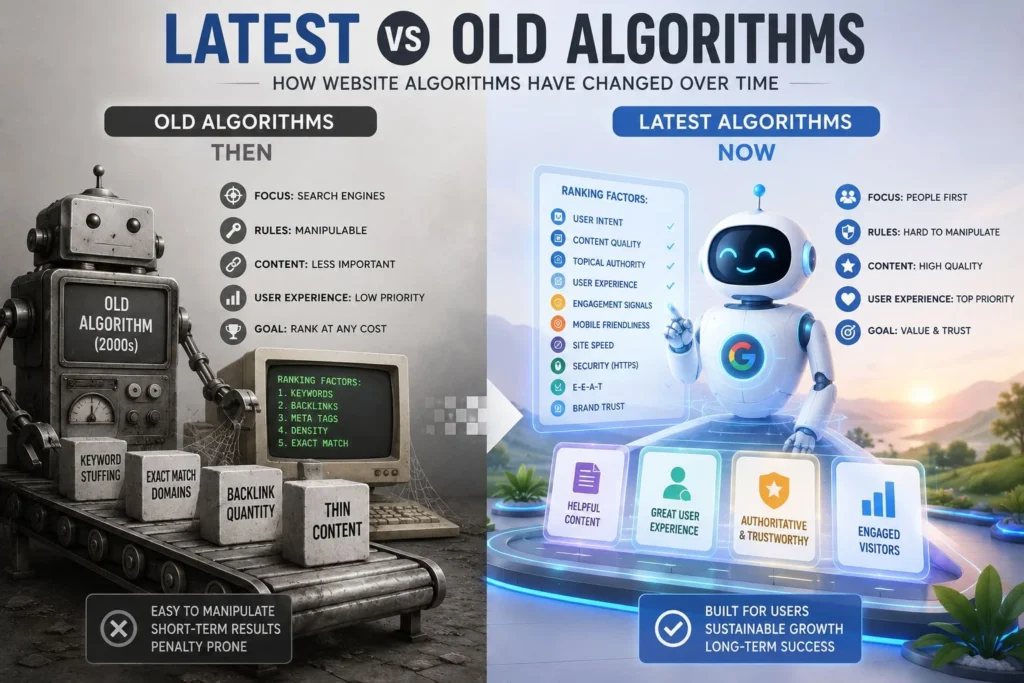
In the digital world, algorithms play a major role in deciding how websites rank, appear, and perform online. Whether it is Google Search, social media platforms, or recommendation systems, algorithms help organize content for users. Over the years, website algorithms have changed drastically. Old algorithms focused mainly on keywords and backlinks, while modern algorithms focus more on user experience, quality content, and artificial intelligence. According to insights shared by Search Engine Journal, understanding the difference between old and latest algorithms is important for businesses, bloggers, marketers, and developers who want to grow online successfully.
What is a Website Algorithm?
A website algorithm is a set of rules or calculations used by search engines and platforms to rank or recommend content. These algorithms decide which websites appear first when users search for something online.
Example:
When someone searches “best coffee shop near me,” Google’s algorithm analyzes millions of websites and shows the most relevant results.
Why Algorithms Matter:
- Improve user experience
- Show relevant search results
- Remove spam websites
- Organize online information efficiently
Algorithms are constantly updated to improve user experience and remove spam or low-quality content.
Old Website Algorithms
In the early days of the internet, algorithms were much simpler. Search engines mainly focused on basic ranking factors such as keywords and backlinks.
1. Keyword Stuffing Era
Old algorithms heavily depended on keywords. Website owners repeated the same keyword many times to rank higher.
Example:
- “Premium shoes”
- “Budget-friendly shoes”
- “Affordable shoes”
- “Online shoe shopping”
Even if the content was poor, websites could still rank high by using excessive keywords.
Problems:
- Low-quality content
- Poor user experience
- Spam websites ranking easily
2. Backlink Quantity Over Quality
Older algorithms considered the number of backlinks more important than quality. Websites created thousands of fake links just to increase rankings.
Results:
- Spam link farms became common
- Untrustworthy websites ranked higher
- Manipulative SEO techniques increased
3. Exact Match Domains
Earlier, having a keyword in the domain name helped websites rank quickly.
Examples:
- bestfitnesstips.com
- cheapmobilephones.net
Search engines gave importance to these domains even without high-quality content.
4. Thin Content Ranking
Content quality was not adequately assessed by previous algorithms. Even short articles with little value could rank on search engines.
Examples:
A 300-word article with repeated keywords could appear on the first page of Google.
Latest Website Algorithms
Modern algorithms are much smarter and user-focused. Today, platforms use Artificial Intelligence (AI), machine learning, and behavioral analysis to rank content.
1. User Experience (UX) is Important
Modern algorithms focus heavily on user experience.
Important Factors:
- Fast loading speed
- Mobile-friendly design
- Easy navigation
- Secure websites (HTTPS)
If a website loads slowly or looks bad on mobile devices, rankings can decrease.
2. Quality Content Matters
Today’s algorithms understand content better than before.
Search Engines Now Prioritize:
- Original content
- Helpful information
- Proper formatting
- User intentInstead of keyword stuffing, websites must create valuable content that solves problems for users.
Instead of keyword stuffing, websites must create valuable content that solves problems for users.
3. AI and Machine Learning
Modern algorithms use AI to understand search behavior.
Popular Google Updates:
- RankBrain
- BERT
- Helpful Content Update
These updates help search engines understand natural language and human intent.
Example:
If a user searches:
“Best phone for photography under budget”
The algorithm understands the meaning instead of only matching exact keywords.
4. E-E-A-T Concept
Google now values:
- Experience
- Expertise
- Authoritativeness
- Trustworthiness
Websites with trusted information and expert content perform better.
Important for:
- Health websites
- Finance websites
- Educational content
5. Mobile-First Indexing
Most internet users now browse using smartphones. Modern algorithms prioritize mobile-friendly websites.
If a Website Performs Poorly on Mobile:
- Lower rankings
- Higher bounce rates
- Reduced traffic
Responsive design has become essential.
6. Core Web Vitals
Google introduced Core Web Vitals to measure user experience.
These Include:
- Loading speed
- Visual stability
- Interaction speed
Websites that perform well technically receive better rankings.
Major Differences Between Old and Latest Algorithms
Major Differences Between Old and Latest Algorithms
Old Algorithms | Latest Algorithms |
Focused on keywords | Focus on user intent |
Easy to manipulate | Harder to manipulate |
Quantity of backlinks mattered | Quality backlinks matter |
Thin content could rank | High-quality content required |
Desktop-focused | Mobile-first approach |
Simple ranking methods | AI-powered ranking systems |
Poor UX acceptable | UX is very important |
Why Algorithms Keep Changing
Search engines update algorithms to improve user experience and stop spam practices.
Main Reasons:
- Providing accurate information
- Reducing fake websites
- Improving search quality
- Supporting genuine creators
- Adapting to modern technology
Without updates, low-quality websites could dominate search results.
Impact on Digital Marketing
Modern algorithms have completely changed digital marketing strategies.
Old SEO Strategies:
- Keyword stuffing
- Buying backlinks
- Duplicate content
- Spam pages
Modern SEO Strategies:
- Content marketing
- Technical SEO
- User engagement
- Voice search optimization
- Video content
- AI-assisted optimization
Instead of influencing rankings, businesses today prioritize giving value and fostering trust.
Future of Website Algorithms
The future of algorithms will become even more advanced with AI and automation.
Future Trends May Include:
- Personalized search results
- Voice and visual search
- AI-generated recommendations
- Better spam detection
- More focus on user behavior
- Real-time content analysis
Search engines will continue prioritizing websites that provide genuine value to users.
Final thoughts
Website algorithms have evolved from simple keyword-based systems to intelligent AI-powered technologies. Websites could rank utilizing shortcuts like keyword stuffing and spam backlinks thanks to outdated algorithms. However, modern algorithms focus on quality, trust, user experience, and helpful content.
Today, success online depends on understanding users and providing real value instead of trying to trick search engines. Businesses and creators who adapt to modern algorithm updates will continue to grow and stay competitive in the digital world.
As technology continues to evolve, algorithms will become smarter, making quality content and user satisfaction more important than ever before.